Famous Himalayan Rivers and Their Origins: Wild Hike Adventures
The Himalayas, often referred to as the “Water Tower of Asia,” are the source of some of the most prominent river systems in the world. These rivers are not only geographical features but the lifeblood of millions, shaping the culture, economy, and ecology of the Indian subcontinent.
At Wild Hike Adventures, we believe that every trek is a journey through these ancient landscapes. Understanding where these mighty waters begin adds a layer of depth to every trail we climb.
Famous Himalayan Rivers and Their Origins
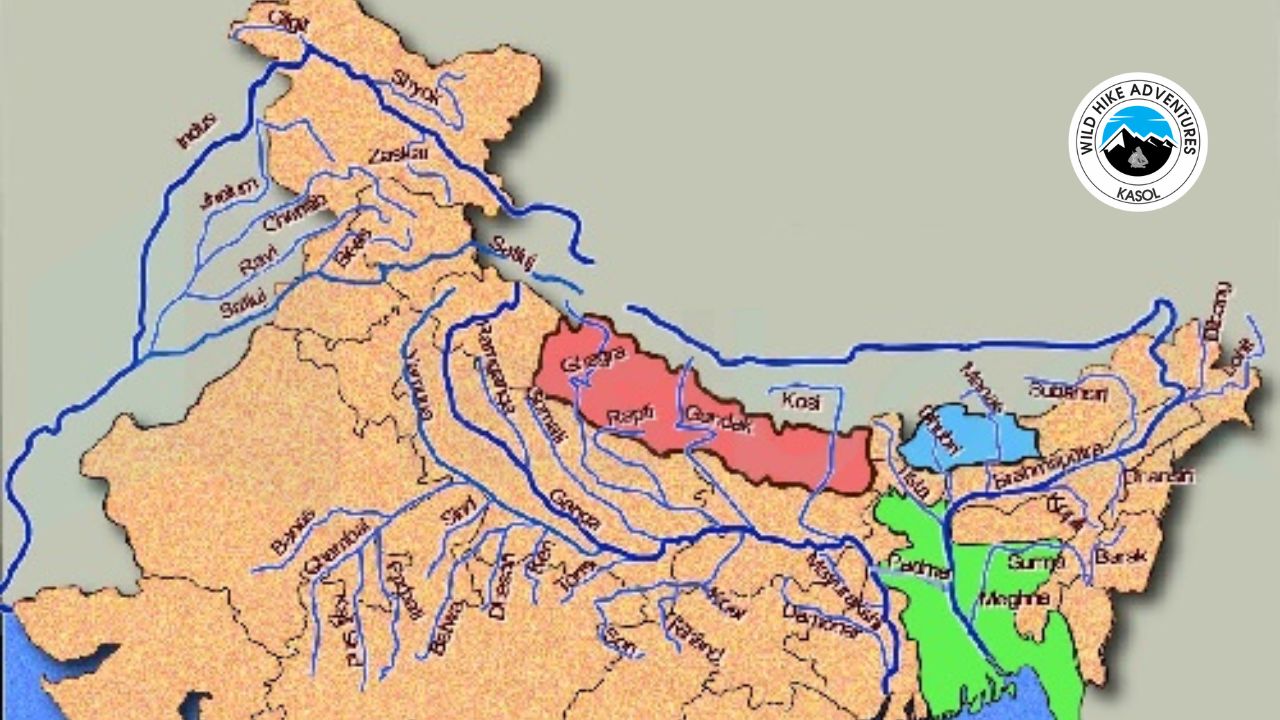
Below are the details on the major Himalayan rivers, including their glacial beginnings and their eventual paths:
- Ganges: The Ganges is a trans-boundary river that begins its journey at the Gangotri Glacier in the state of Uttarakhand, India. It travels for approximately 2,525 kilometres before emptying into the Bay of Bengal in the country of Bangladesh. Over four hundred million people in India and Bangladesh depend on the river as their primary source of drinking water.
- Indus: The Indus River is another trans-boundary river that flows through India, Pakistan, and Afghanistan. Its headwaters are located on the Tibetan Plateau, a part of the Himalayas, and it travels for approximately 3,180 kilometres before reaching the Arabian Sea. The river serves as an important source of water for a variety of industries and agricultural pursuits in the area.
- Brahmaputra: This river flows through China, India, and Bangladesh before emptying into the Bay of Bengal. Its source is in Tibet. The river’s length is approximately 2,900 kilometers, and it ranks ninth among all rivers in the world in terms of the amount of water it discharges.
- Sutlej: The Sutlej River has its headwaters in Tibet and travels all the way down through India and Pakistan before it finally empties into the Arabian Sea. The river’s length is approximately 1,550 kilometers, and it serves as an important water supply for agricultural endeavours in the area.
- Yamuna: The Yamuna River is a tributary of the Ganges and begins its journey as a glacial outflow from the Yamunotri Glacier in the Indian state of Uttarakhand. After winding its way through northern India for approximately 1,376 kilometers, the river finally meets up with the Ganges in Allahabad.
- Chenab: The Chenab River is a tributary of the Indus River and begins its journey at the Bara Lacha Pass in the state of Himachal Pradesh, India. Before it eventually meets up with the Indus River, the river travels approximately 960 kilometres through India and Pakistan.
- Kosi: The Himalayas in Nepal are the source of the Kosi River, which flows into the Ganges and is a tributary of that river. Before flowing into the Ganges at Farakka, the river travels approximately 730 kilometres through Nepal and India on its way to India.
| River | Origin / Source | Primary Region |
| Ganges | Gangotri Glacier | Uttarakhand |
| Indus | Tibetan Plateau | Tibet / Ladakh |
| Brahmaputra | Tibet | Tibet / Assam |
| Sutlej | Rakshastal (Tibet) | Tibet / Himachal |
| Yamuna | Yamunotri Glacier | Uttarakhand |
| Chenab | Bara Lacha Pass | Himachal Pradesh |
| Kosi | Nepal Himalayas | Nepal / Bihar |
Conclusion
These rivers are necessary for the people and ecosystems of the Himalayan region. For adventurers at Wild Hike Adventures, these waters represent the raw power of nature. Effective management and conservation of these sources are essential for the region’s continued sustainable development and the preservation of the trekking trails we love.